
Marshall County Criminal Register
Criminal charges in Marshall County land in Minnesota District Court, Ninth Judicial District. There is no separate county criminal court here. The county's official court page assigns criminal jurisdiction to the Marshall County District Court. Court Administration keeps the case files, registers of actions, hearing calendars, and copy services. Civil, family, probate, juvenile, and traffic matters run through the same office too.
Start your docket search at Minnesota Court Records Online, or MCRO. Searching there is free. The current public notice says no registration is needed. Choose the criminal category and Marshall as the location when filters help. Treat MCRO as an unofficial view, though. A public terminal at the courthouse offers deeper electronic access, and Court Administration handles certified copies, older paper files, and case-specific questions.
Marshall County Criminal Docket Searches
A case number beats everything else for a Marshall County criminal docket search. MCRO will also take a citation number, attorney details, or a person's name. Most Minnesota case numbers blend a two-digit county code, case-type letters, a two-digit year, and a sequence number. Sometimes location letters get thrown in too. Do not guess a prefix or county code. The actual court paper is the safe source.
Name searches have a real limit. A pending criminal case may stay invisible in a defendant-name search until conviction. Before trusting an empty result, check spelling, category, county location, and date filters. Adding a trailing wildcard after at least two characters widens a name search. MCRO's Sounds Like option widens it too. But the system says never to pair the two.
- Open MCRO Case Search and select Criminal plus Marshall under court locations when a local result is needed.
- Enter the known case number, citation number, attorney information, or name. Use the exact case number when it is available.
- Open the matching case and review Case Details, labeled the Register of Actions, before drawing a conclusion from a result line.
- Use Hearing Search or the Marshall daily calendar to check the current setting, then contact Court Administration if the matter is urgent.
- Ask Court Administration for a certified copy or older material when the remote record is incomplete.
Note: no result in MCRO does not prove Marshall County holds no court record for the matter.
Marshall County Citation Routing
A citation number can open the door to a Marshall criminal case. But paying a ticket and tracking a docket are separate questions. Minnesota tags some cases CR. That is a mandatory-appearance example. VB is a non-mandatory and possibly payable example. In any individual matter, the citation itself and the official payables list control. The Minnesota Court Payment Center exists only for citations that are truly payable. So it never replaces the criminal register of actions.
The statewide standard citation program lays out the official citation framework. Citation numbers are normally preprinted, often with a barcode. That number works far better as a lookup key. A guess from a license plate is no substitute. A citation may become a court case. The register can then show hearing events, financial fields, and later procedural activity.
For context, the official statewide citation resource explains how these numbers are built and routed statewide.
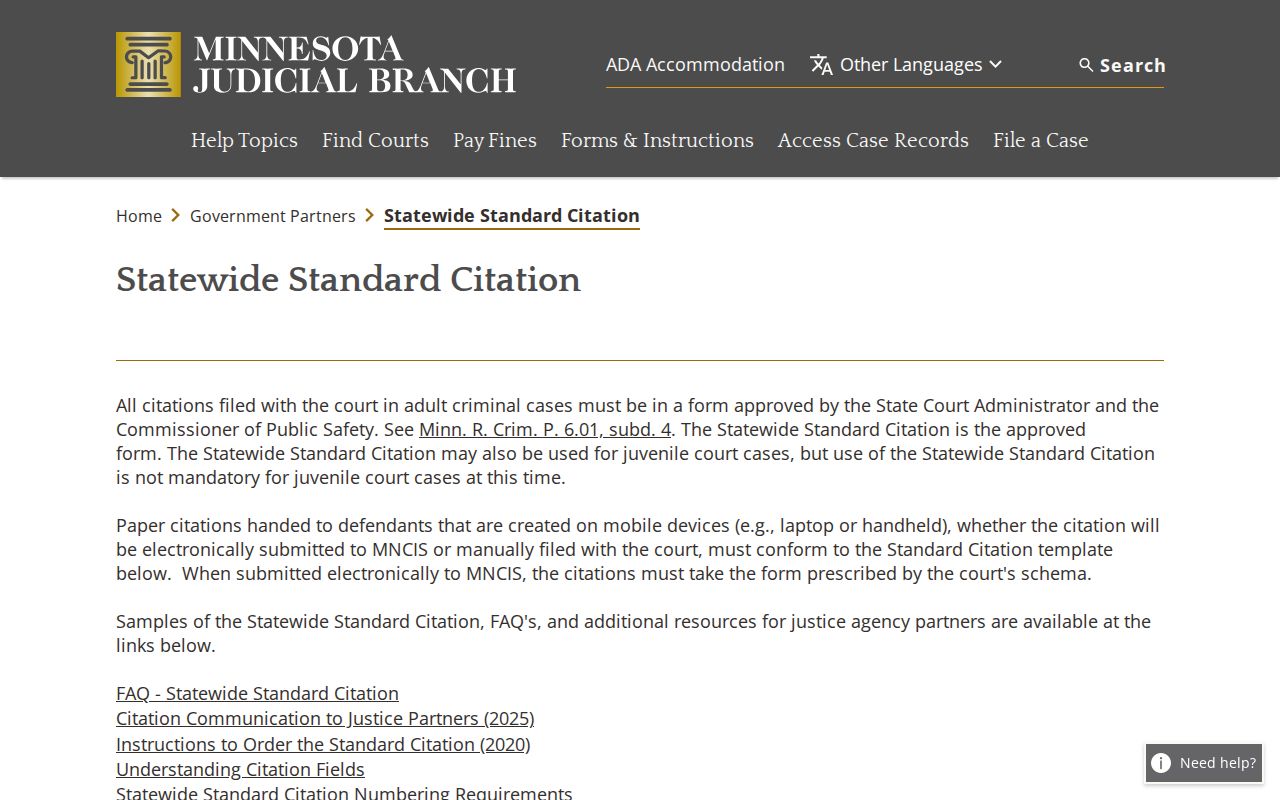
The citation material makes the same local point. Once a case is filed in Marshall County, it sits in the district-court system, not in any separate city or county criminal docket.
Criminal Dockets: What They Show
MCRO splits a criminal case into sections instead of one tidy summary. Case Information can carry the number, title, type, filing date, court location, judicial officer, status, citation number, and flags. Related cases can appear too. Party Information names the roles and any attorneys, as the portal allows. From there the case view steps through warrants, charges, interim conditions, case assignment, Case Events, hearings, dispositions, and bond or bail activity. Financial information comes too.
| Case number | The court identifier, often structured with county, case-type, year, and sequence elements. Keep the original format when searching. |
|---|---|
| Charge block | Counts, classification or statute fields when displayed, and amended-charge history. A charge is an allegation, not an outcome. |
| Case Events | Reverse-chronological entries with dates, descriptions, and sometimes a document index or view-document control. |
| Hearings | Upcoming and prior settings, including time, proceeding type, court information, and judicial officer where displayed. |
| Disposition and finance | Plea, dismissal, sentencing, judgment, fines, payments, credits, or balance information when the particular record makes them public. |
Read the charge, the event history, and the disposition as separate parts. They are not one story. A criminal matter can carry amended counts and later orders that change what an earlier entry meant.
Marshall County Criminal Event Order
Case Events list the newest entry first. That layout makes the latest hearing, order, payment, or disposition easy to spot, but reading only the top line can scramble the real sequence. When timeline matters, work backward through the dated entries. A label like Filed means a document entered the file. It does not mean the court granted anything.
Minnesota's criminal-rule definitions help sort out charging documents and procedural vocabulary, though the individual register still controls for a given case. The official rule source supplies that definition text.
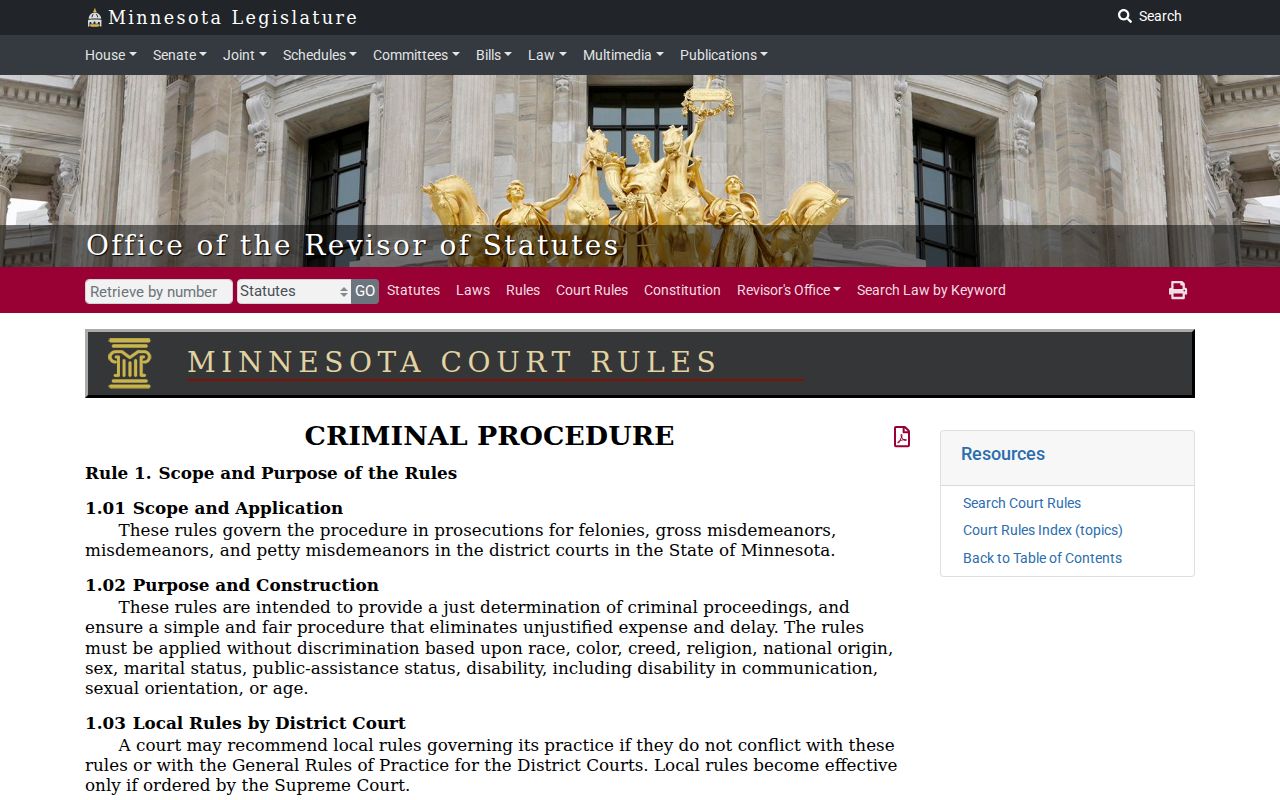
A warrant flag needs context too. MCRO cautions that a party-level active-warrant flag may relate to a different case. Check the opened case and its event history before assuming the flag belongs to that docket.
- Filed
- A pleading or document was accepted into the court file. It is not necessarily a ruling.
- Continuance or reset
- A proceeding moved to another setting. It does not resolve the criminal case.
- Disposition
- An outcome entry that must be read to determine whether it records a plea, dismissal, conviction, sentence, or another result.
Criminal Case Stages on the Docket
The broad sequence is Filing → Arraignment → Pretrial → Plea or Trial → Disposition → Sentencing. Not every Marshall County criminal docket will show every stage in the same way. Case assignment, interim conditions, bond or bail, and financial information have their own blocks. The register also may record more than one setting before a case reaches an outcome.
Keep charges and their amendments apart from final results. The case view may show a charge label, count structure, and classification first, then an order, plea, dismissal, or sentence later. Bond activity covers amount or status where shown. Interim conditions live in their own field, and neither field alone spells out every release condition.
Marshall County DWI Court Boundary
Minnesota's treatment-court directory lists a DWI Court for Marshall County. It is a specialty program, not its own docket portal. The underlying criminal case still lives in the Marshall County District Court register, and a DWI Court reference can shape case assignment, hearings, compliance, and administrative events on the criminal docket.
Begin with the MCRO case number. Then work through Case Assignment, Interim Conditions, Case Events, Hearings, Dispositions, and the financial fields. Treatment and compliance details can be sensitive. So the public daily calendar may leave some matters off limits for remote viewing. Keep one thing straight: a DWI Court listing is not a conviction. It is not a disposition either.
Marshall County Criminal Docket Courts
One court holds the Marshall County criminal docket. That is the Marshall County District Court, part of the Minnesota District Court system. Minnesota runs no separate local municipal, justice, or county-level trial-court docket for Marshall County. So don't split your Marshall criminal search between an invented criminal clerk and some second trial court. Court Administration is the local contact point for the unified district-court file.
Before any scheduled appearance, check the MCRO Hearing Search. Then compare it with the Marshall daily calendar. The PDF is posted on business days and can change without notice. Printed calendars outside the courtrooms and in the public lobby stay the court's most current local source. So verify remote results when an appearance date matters.
Marshall Criminal Copies Beyond MCRO
MCRO Document Search needs a complete case number, and it lists document results newest first. Viewing online documents is generally free. Anything filed before July 1, 2015 has limited online availability, though. The courthouse public terminal gives fuller electronic access to the court records. Court Administration can also handle locally held paper records. It covers certified copies, too, and questions about a specific filing.
The official statewide payable-offense materials help you judge whether a citation might be payable. Paying is not the same as seeing a case's full criminal history.
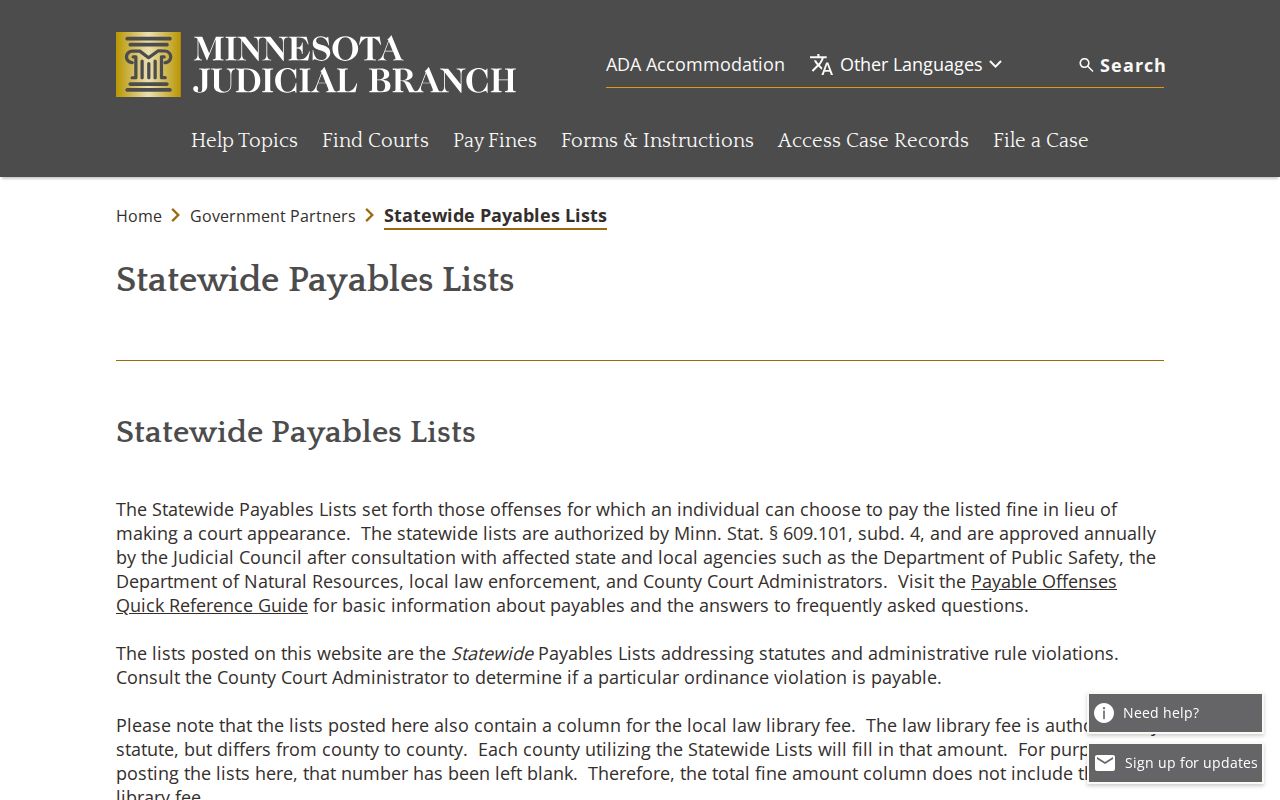
For certified copies or older criminal docket material, go straight to Marshall County Court Administration at the courthouse. Skip the commercial records services and the public payment channel. That office is the local fallback.
Access Rules for Criminal Dockets
Minnesota General Rules of Practice Rule 8 governs access to court records. It allows inspection and copying of public original records. That happens where they are normally kept, during regular hours. The rule also treats the register of actions, calendars, indexes, judgment docket, and remote access as related but distinct pieces. Each is a separate slice of court-record access. Minnesota's Data Practices Act adds public-data context. Yet Rule 8 decides the court-record question.
Remote access is narrower than a walk-in inspection at the courthouse. Juvenile, child-protection, commitment, protection-order, and some family material can be restricted or missing online. A sealed record is not automatically a dismissed, closed, or expunged case. MCRO may show limited metadata, a restriction indicator, or nothing viewable at all. Never read a result into what the remote screen leaves blank.
Access point: MCRO is unofficial and cannot certify a record. Public inspection is generally free under Rule 8 unless another law applies, while copies can carry fees.
For a confidential or sealed-record request, use the official CON101 form when appropriate. The court decides whether access is allowed.
Certified copies and older records in Marshall County run through Court Administration. It is led publicly by Court Administrator Pamala Shaw. You can request copies through MCRO, in person, by mail, or through eFS where it is allowed. The county offers no online copy form of its own. Confirm local submission details before you send anything. The courthouse sits at 208 E Colvin Avenue, Suite 18, Warren, Minnesota 56762. Call (218) 745-4921.