
Marshall County Civil Register Basics
Civil matters in Marshall County are heard by the Marshall County District Court, part of the Minnesota District Court system. One Court Administration office handles the civil docket along with criminal, family, probate, juvenile, and traffic records. No separate Marshall civil clerk portal exists. So whether the dispute involves a business, property, or family issue, the record lives in the district-court docket.
Minnesota Court Records Online, called MCRO is the free remote layer for docket searches. No registration is needed for public searches. Results are unofficial. For deeper access, a public terminal at the Marshall courthouse shows more, and Court Administration answers questions, pulls older paper files, and issues certified copies.
Marshall County Civil Docket Searches
MCRO Case Search has Civil as a category. You can run a case lookup by party or business name. Case number, attorney, filing date, case status, and court location also work as search fields. Pick Marshall from the county locations to focus the search. A case number beats a name search, since similar names often return multiple results. Grab the number from a notice, order, or earlier filing when you have it.
Start narrow, then widen. For names, MCRO offers a trailing wildcard after at least two characters. A separate Sounds Like option also exists. Do not combine the two. Remember that the search is only a starting point; not every filing or related matter appears remotely. Before concluding a record is missing, double-check the civil category and the county filter.
- Open MCRO Case Search, select Civil, and choose Marshall as the court location when a county result is needed.
- Search by exact case number, party or business name, attorney, or filing date as the available information permits.
- Open Case Details, the Register of Actions, and read the current status together with the dated Case Events.
- Use Hearing Search and the Marshall daily calendar to check an upcoming civil setting.
- Contact Court Administration for a certified copy, older file, or document that does not display remotely.
Marshall County Civil MCRO Filters
MCRO splits its categories into Civil, Criminal, Family, and Probate or Mental Health. The split matters here. All those case types pass through Marshall County's district-court system. Yet their remote access rules differ. Someone hunting a civil docket should not swap in the family or probate filter. Names or addresses may overlap, but that is not enough.
The system also separates Case Search, Document Search, Hearing Search, and Judgment Search. Document Search requires a full case number. Dashes or leading zeros are optional, but never spaces. Judgment Search spotlights monetary judgment details and the latest award. For the full event history and any related civil record, Case Details is the better stop. The official Minnesota eFile and eServe material explains the filing system used for eligible district-court filings.
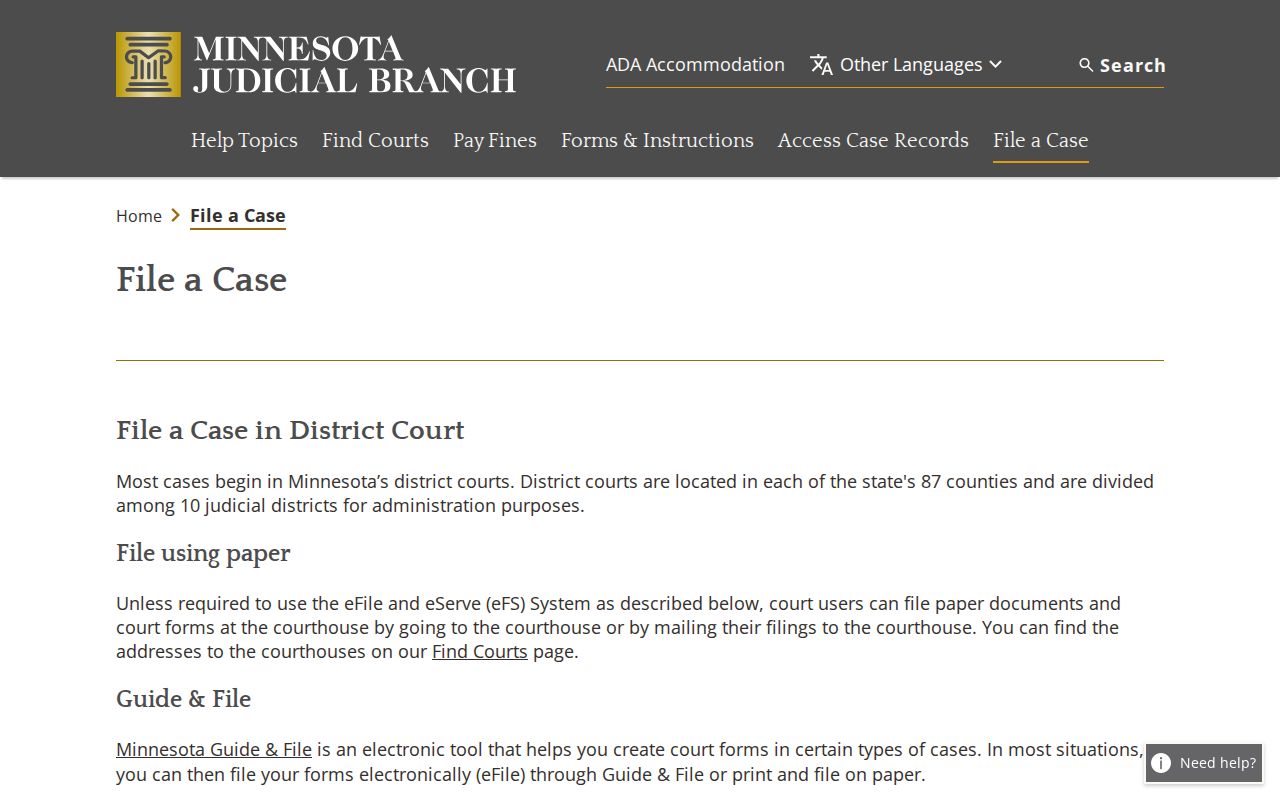
Minnesota eFile and eServe, or eFS, is a system for filing and serving documents. It is not the public portal for reading a civil docket. You do not need an eFS account to view an MCRO civil register.
Civil Dockets: What They Show
A Marshall County civil docket opens with the basics. Expect the case number, title, case type, filed date, venue, judicial officer, status, flags, and related cases. The party block names the plaintiff or petitioner and the defendant or respondent, plus attorneys and bar information where public display allows. From there the register adds dated event labels, hearing information, document links where available, and financial or judgment details.
| Case information | Number, title or style, type, filed date, Marshall venue, judicial officer, status, flags, and links to related cases. |
|---|---|
| Parties | Role labels such as plaintiff, petitioner, defendant, or respondent, plus attorney information where the portal displays it. |
| Case Events | Dated entries for a complaint or petition, service, response, motion, order, setting, reset, judgment, appeal, or post-judgment activity. |
| Documents | Document index numbers and view-document controls when remote viewing is available. Availability varies by document and date. |
| Outcome and finance | Dismissal, settlement, judgment, monetary award, payment or satisfaction information, and case status when shown. |
A Closed field is just a status. It does not mean every obligation ended, that each document is public remotely, or that no related proceeding exists.
Marshall County Civil Event Timeline
Read civil event labels plainly. A complaint or petition opens the case. Service or citation activity shows an effort to notify a party. An answer or response joins the issue. After that come motions, affidavits, notices, hearings, orders, continuances, and settlement entries. These are routing examples, not a Marshall codebook, so rely on the document itself for the full terms.
One caution matters most. A filed motion is not a ruling; an order is the court's direction. A hearing entry is only a setting. A judgment or disposition reflects an outcome. The register runs in reverse chronological order, so trace the dates and descriptions in sequence before treating the newest entry as the whole story.
- Service
- Recorded action to deliver or give notice of a filing. It is not proof that the case has been decided.
- Continuance or reset
- A hearing or proceeding moved. The new event and hearing details matter more than the old date.
- Satisfaction
- A recorded indication that a monetary judgment was paid, collected, or otherwise satisfied as the record describes.
What Cases Fill the Civil Docket
Marshall County District Court holds original civil jurisdiction. The same unified administration also processes family, probate, juvenile, criminal, and traffic cases. The public Civil filter is the right first stop for a civil register. Access and exact labels vary with each file. A related case link can point to an appeal, a companion claim, or another proceeding needing its own docket review.
| Record area | What the civil register may show |
|---|---|
| Initiating filings | Complaint or petition, followed by service or response activity. |
| Pre-hearing work | Motions, affidavits, notices, orders, and scheduled settings. |
| Resolution | Dismissal, settlement-related activity, judgment, appeal, or post-judgment entries. |
| Related cases | Linked case numbers that can lead to companion or appellate proceedings. |
Never call a settlement a court finding unless the record says so. In the same way, a monetary judgment detail does not replace the full history in Case Details.
Hearings on the Civil Docket
MCRO Hearing Search narrows by Civil, hearing date, county, name, case number, judicial officer, or attorney. Case Details adds context through its Hearings block and Case Events. The Marshall daily calendar PDF gives a second local date check. Both remote sources shift. Match the newest docket entry against the current calendar before you rely on either.
A civil setting is scheduled, not decided. A continuance, reset, later order, or notice can change everything after it. The full date-check routine lives on the Marshall County court schedule page. And the court itself calls the printed calendars most current. Those are posted outside courtrooms and in public lobbies.
Marshall County Civil Filing Systems
Minnesota eFS handles eligible civil filings, but it does something different from MCRO. Attorneys, government agencies, and guardians ad litem generally must file there. Self-represented filers may use it too. Paper filing stays open to anyone not required to eFile, and a document's eFS security level shapes whether the public can reach it remotely. The official eFS resources page lays out the filing rules.
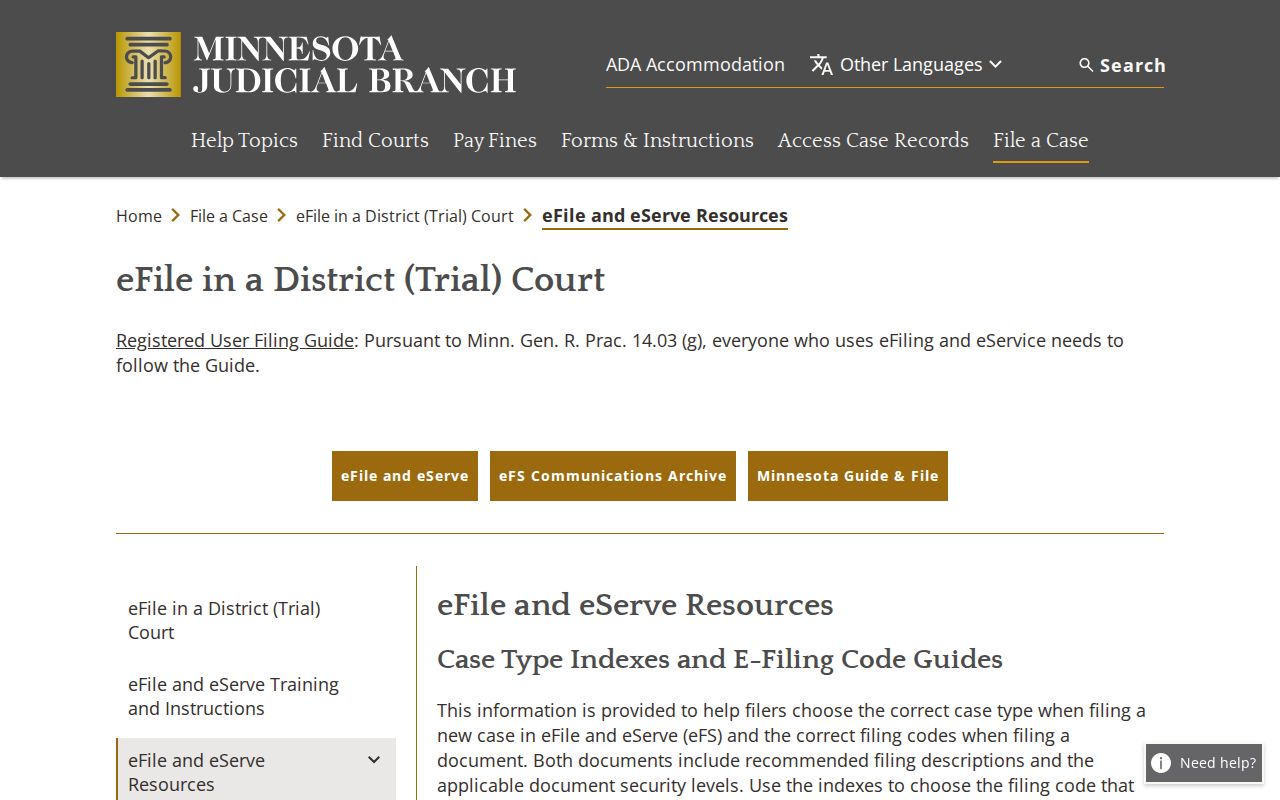
That filing resource is not an MCRO substitute. Even when an eFS user hits a document-link or authentication problem, a public filing can still show up through MCRO. The official eFS document-link notice also records the January 2024 email-authentication change.
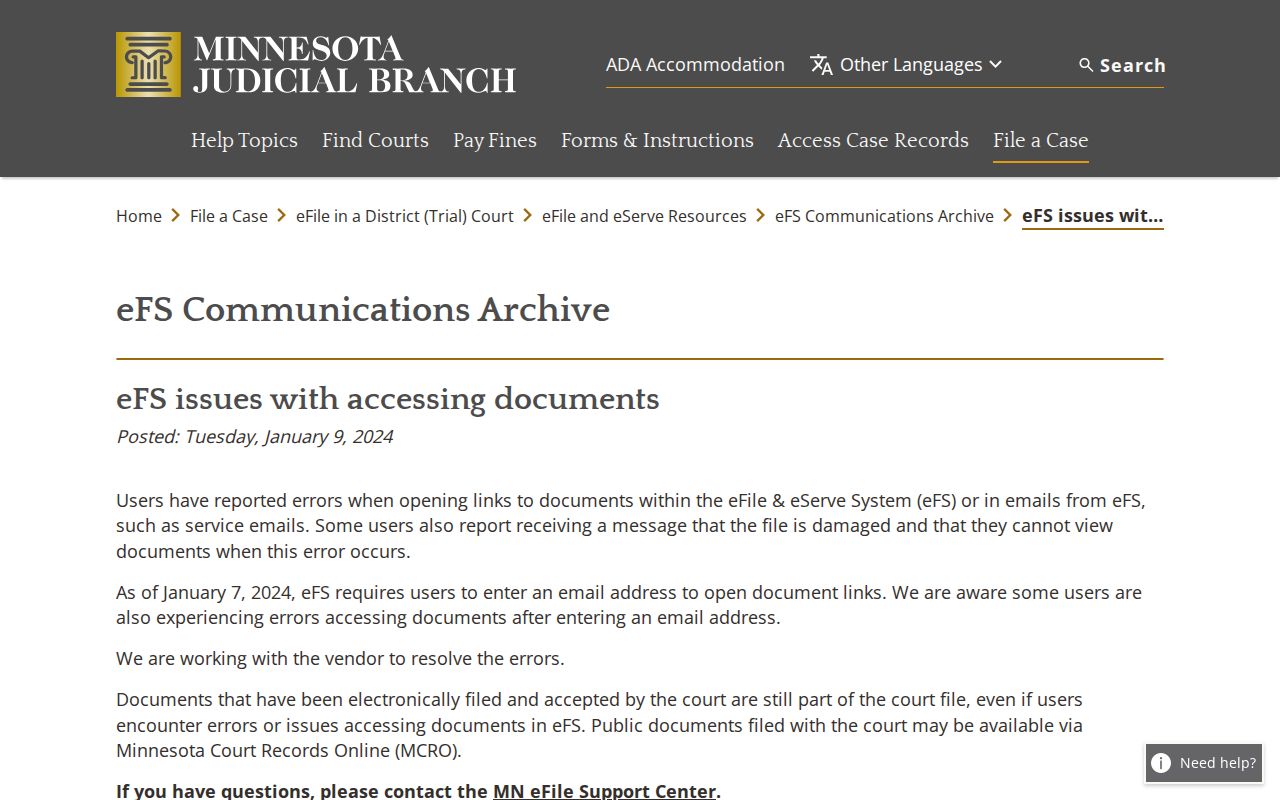
The notice mainly helps filers. Marshall County's public civil register is still read through MCRO and local Court Administration.
Marshall County Civil Document Access
MCRO Document Search wants a complete case number. Viewing online is generally free. Coverage before July 1, 2015 runs thin, though. A document absent from the remote view may still exist. Check the courthouse public-access terminal or local paper records. Ask Court Administration about the exact case number, document, and copy type. Don't trust an empty screen. Copies can come through MCRO, the counter, mail, or eFS where allowed. Marshall posts no county-specific online copy form, so confirm local submission details first. The official eFS outage log tracks filing-system downtime. That is a separate question from reading a public case file.
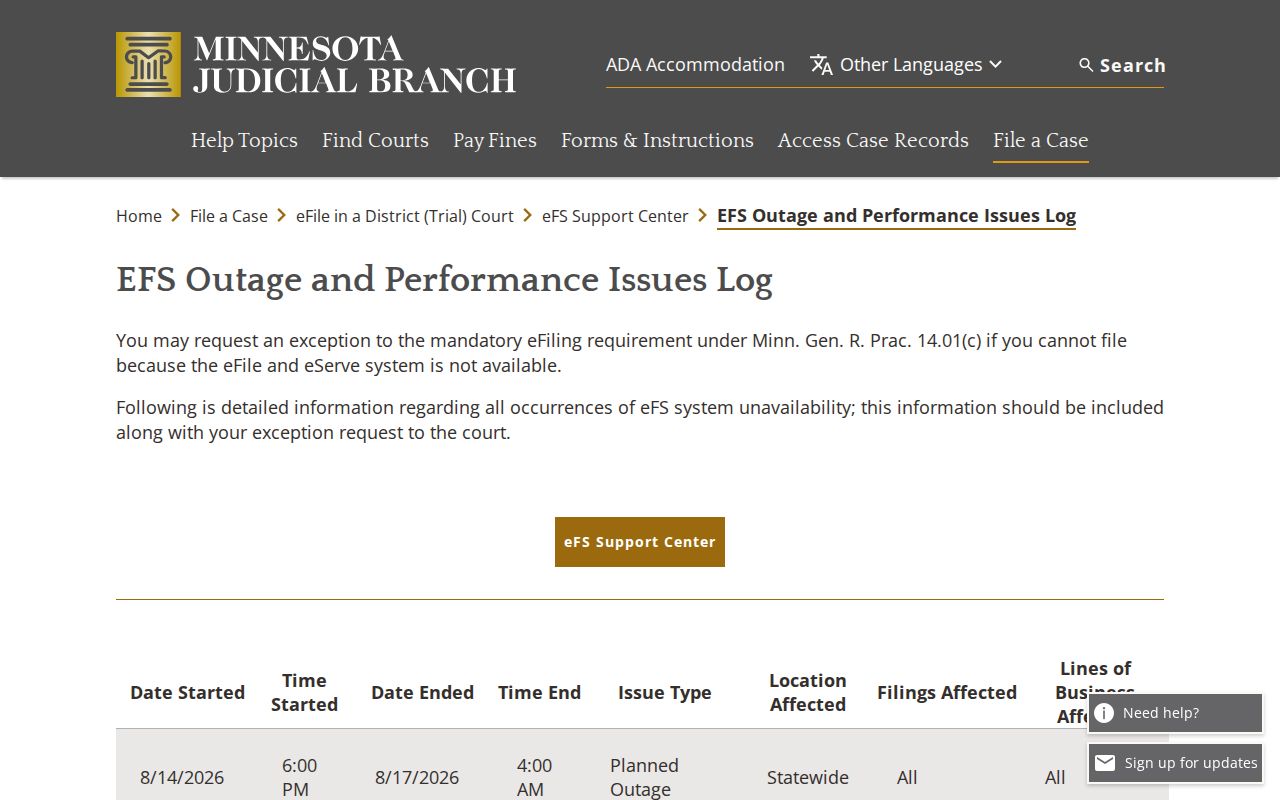
An eFS outage notice never proves a civil document is missing from the court file. MCRO, the courthouse terminal, and Court Administration still form the document-access chain.
Who Can See Civil Dockets
Minnesota General Rules of Practice Rule 8 governs who sees public court records. It permits inspection and copying of public original records where they are normally kept. That access runs during regular hours. Remote access faces narrower limits. Registers of actions, calendars, and related court-record layers all fall under the rule. The Minnesota Government Data Practices Act adds context. It does not supply the full access standard for judicial records.
Restricted categories bring special rules. Family, protection, commitment, and juvenile files can carry tighter remote-access limits. Family files may treat court-generated documents differently from party-submitted material. A document missing remotely does not mean no inspection route exists. Sealed, confidential, or restricted records may need a court-approved process. Remember that a sealed record is not the same as a dismissal or expungement.
Local access chain: Search MCRO first, inspect the courthouse terminal for fuller electronic access, then contact Marshall County Court Administration for older, certified, or record-specific requests.
The official CON101 request form is for appropriate confidential or sealed-record access requests. It does not guarantee disclosure.
Marshall County Court Administration sits at 208 E Colvin Avenue, Suite 18, Warren, Minnesota 56762. Court Administrator Pamala Shaw is the publicly listed head. Call (218) 745-4921 for the local district-court copy and certification channel.